
Why did Moderns replace Neanderthals and not vice versa? And what took them so long? And did this just happen to occur at the MP-UP interface?
Abstract
Great attention and heated debate have been directed towards the causes of the Neanderthals’ rapid replacement across Europe by Modern humans between 50,000-40,000 years ago. But what did we expect would happen? Is the replacement so different from what a null model would suggest?
Further, less attention has been directed towards an even more intriguing question: given that replacement across Europe could be so swift, what can explain the tens of thousands of years during which the two species’ front of interaction was geographically localized to the Levant, and the sudden breakdown of this front? And how come MP and UP cultures seem to have closely co-existed in the Caucasus for thousands of years?
Finally, it seems unlikely that it is merely a coincidence that the MP-UP cultural transition happened at the same time; however, the simple explanation, of a cognitively and culturally advanced sub-species emerging out of Africa and replacing Neanderthals and Denisovans seems to be missing key supportive evidence that would have been expected.
We suggest that the species’ interaction(s), over time and space, and the respective transmission of genes, pathogens, and culture, hold the key to these questions. I will propose a series of eco-evo-inspired models that may provide insight regarding these dynamics, bringing together biological and cultural evolution.
About the Presenter
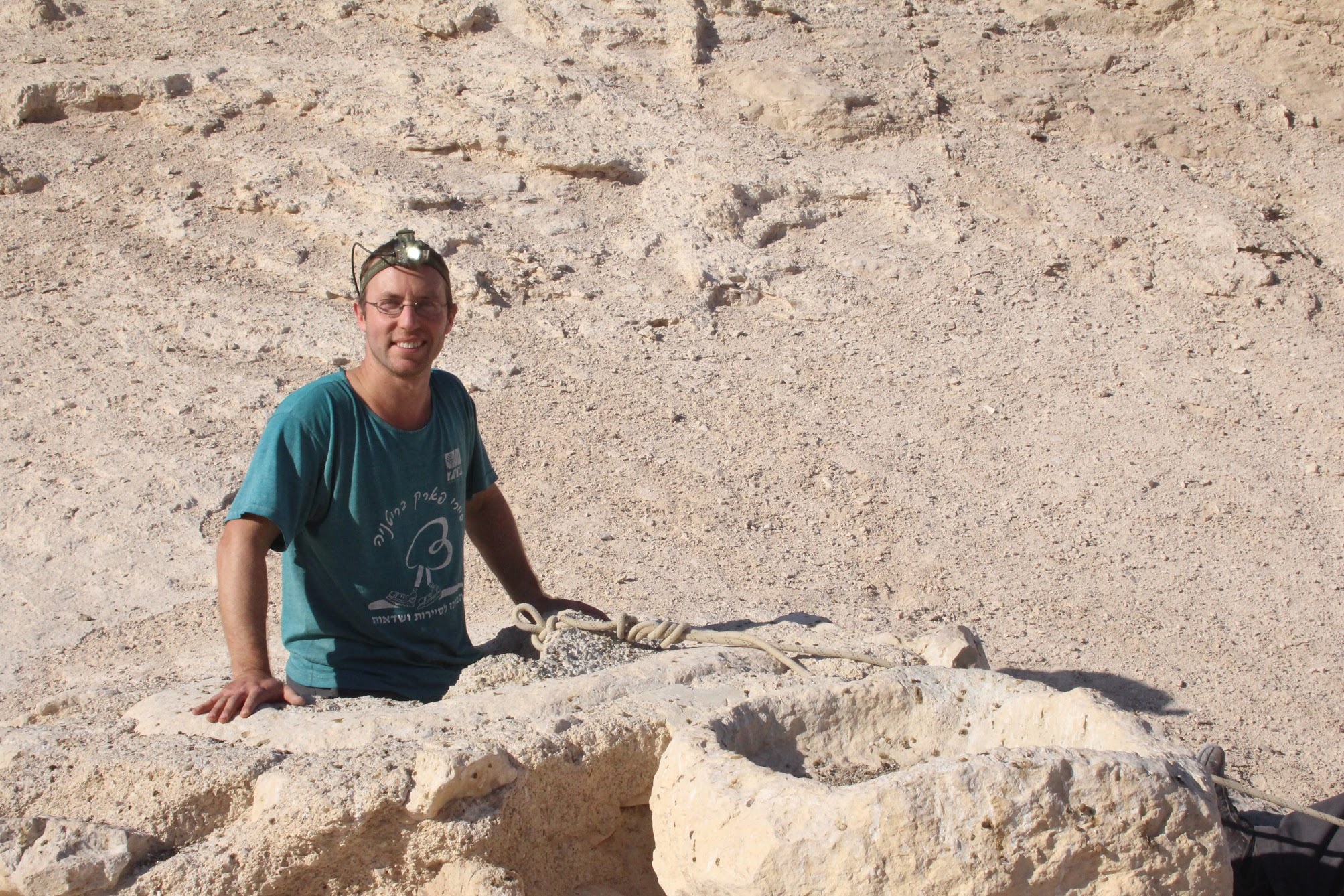
Dr Oren Kolodny
I am an ecologist and evolutionary biologist. My lab focuses on developing theory and leveraging computational tools to tackle questions that involve dynamics across diverse time scales and systems. We are particularly interested in understanding the dynamics of animal and human populations and ecosystems under various selective forces and constraints, including, and perhaps in particular, those related to social learning and cultural evolution in prehistorical populations. We often use cross-disciplinary analogies, bringing models and case-studies from wildlife research to bear on eco-evolutionary dynamics of ancient humans. Thus, we apply empirical data and generative modeling to explore the impact of partially connected meta-populations and the respective flow of genes, microbes, and culture on the populations’ ecological trajectories and evolutionary fates.
About Archaeology Working Papers
The Working Papers in Archaeology seminar series provides a forum for dissemination of archaeological research and ideas amongst UQ archaeology students and staff. All students are invited to attend the series and postgraduate students, from honours upwards, are invited to present their research. The aim is to provide opportunities for students, staff and those from outside UQ, to present and discuss their work in an informal environment. It is hoped that anyone interested in current archaeological directions, both within and outside the School and University, will be able to attend and contribute to the series.