
HDR Student Seminar - PhD candidates Phoebe Meyrick, Ngaire Dowse & Jacob Birch
Medical intervention, healthcare, and social wellbeing in the W. D. Trotter skeletal pathology collection: Case studies from colonial Otago, New Zealand.
By Phoebe Meyrick
Anatomical human skeletal collections have been a staple of anatomical teaching for centuries. However, these collections proliferated in the nineteenth century with the first Anatomy Acts which allowed for the use of unclaimed individuals from public institutions to be used in anatomical dissection - resulting in the collection of marginalised individuals. Previous bioarchaeological studies have recognised bony signs of physiological stress and trauma in individuals present in anatomical collections, suggesting that they may represent experiences of hardship in historical contexts. However, little research has been done to explore these individuals’ experiences with medical intervention, access to healthcare, and social experience of disability. In this study, paleopathological analysis of the individuals from the W. D. Trotter skeleton pathology collection at the University of Otago (Ōtākou Whakaihu Waka) was coupled with an analysis of archival medical and charitable cases from public institutions and historical newspapers from colonial Dunedin. This facilitated an investigation into their lived and post-mortem experiences within a bioarchaeology of care/disability framework. The results highlighted the structural inequalities present in colonial Otago, and how these manifested in the trauma and curation of individuals in the skeletal pathology collection.
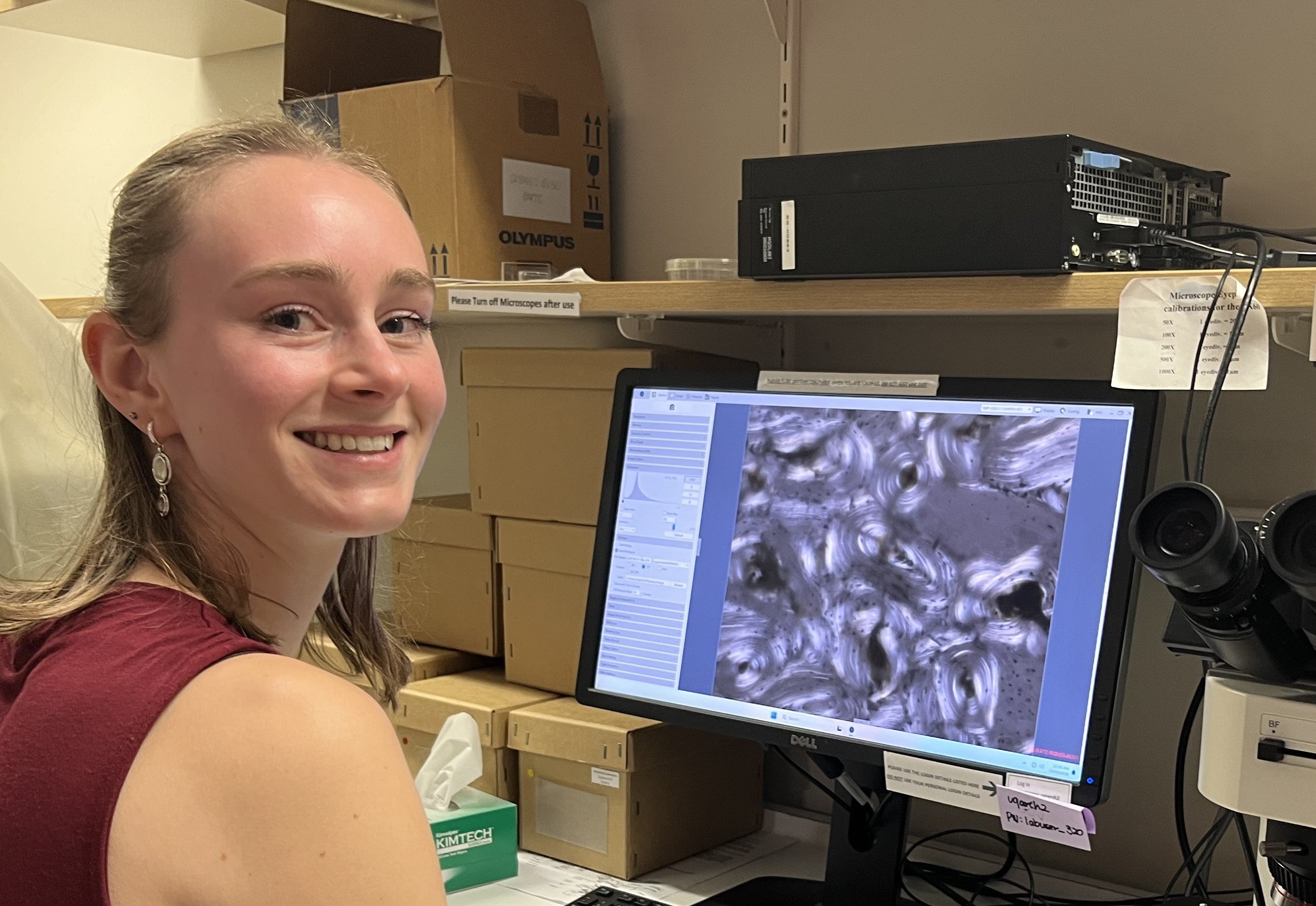 Phoebe Meyrick is a PhD Candidate in Bioarchaeology at the University of Queensland, examining how social inequality is embodied in bone health in ancient human populations. This research hopes to contribute to the understanding of bone loss in
modern populations and its association with socioeconomic status. Her past research projects have also focused on health in the past, including treponemal disease in Papua New Guinea and medical intervention in colonial Otago. Both her Masters and PhD research seek to inform on how social injustices are reflected in the skeleton and how we can work towards rectifying these in today's society.
Whose Risk Counts? Onto-epistemic politics and fracking risk regulation in the Northern Territory’s Beetaloo Basin
By Ngaire Dowse
Hydraulic fracturing in the Beetaloo Basin, Northern Territory, has become one of Australia's most contested resource developments. At the centre of the debate lies the question of risk. While governments and industry frame risk assessment and regulation as objective, scientific mechanisms for enabling the safe development of a strategically important gas industry, anti-fracking activists —including Aboriginal Traditional Owners, environmental organisations, pastoralists, scientists, health professionals, and other community members— argue that fracking poses unacceptable risks to water, ecosystems, human health, climate, and Indigenous relationships with Country.
Drawing on my ethnographic fieldwork, I argue risk assessment not as a neutral technical exercise but as a site where competing understandings of development, evidence, and environmental responsibility are produced and contested. I show how government and industry privilege calculable, discrete forms of risk that render uncertainty governable and extraction legitimate, while activists challenge these assumptions by foregrounding Indigenous knowledge, ecological science, lived experience and relations to Country.
I argue that controversies surrounding fracking in the Northern Territory are not simply disagreements over scientific evidence or regulatory standards. Rather, they constitute onto-epistemic disputes over what counts as credible knowledge, what futures should be protected, and whose understandings of risk are authorised within environmental governance. By analysing risk regulation as an anthropological object, I seek to demonstrate how environmental regulation simultaneously governs extraction and reproduces particular political and ontological commitments.
 Ngaire is a PhD candidate in Anthropology in the School of Social Science. Her research investigates the socio-cultural dimensions of hydraulic fracturing (fracking) in the Beetaloo Basin, Northern Territory, with particular attention to the role of water in shaping environmental conflict, political action, and competing visions of the future. Drawing on political ecology and ethnographic engagement with Aboriginal and non-indigenous activists and communities, her work examines how activists forge alliances, negotiate questions of authority and representation, and respond to the uncertainties generated by extractive development.
Seminar by Jacob Birch - TBA
About Archaeology Working Papers
The Working Papers in Archaeology seminar series provides a forum for dissemination of archaeological research and ideas amongst UQ archaeology students and staff. All students are invited to attend the series and postgraduate students, from honours upwards, are invited to present their research. The aim is to provide opportunities for students, staff and those from outside UQ, to present and discuss their work in an informal environment. It is hoped that anyone interested in current archaeological directions, both within and outside the School and University, will be able to attend and contribute to the series.