
Moral Ecology and Australia's Strategic Imagination
What does it mean to think of Australia’s strategic imagination as a moral ecology? In this seminar I use the term to move away from the idea that ethical life enters strategy only after power has already been accounted for. Strategic language is good at making some things visible from a distance. It can show the movement of power and the pressures surrounding Australian policy towards the Indo-Pacific region. But the worlds drawn into that language are also lived through moral orders that shape what people can recognise as viable or bearable. A significant body of work on Asian and Pacific politics has already shown that regional actors are not simply acted upon by larger powers. I begin from that point and ask how agency takes shape in ways that ought to inform strategic thinking. Moral ecology is my way of describing the relations between moral orders. They may sustain one another, but they may also become predatory. One way of organising collective life can make another harder to live.
The seminar begins with the legacy of the United States military’s Human Terrain System (HTS) in Iraq and Afghanistan, where social knowledge of populations was drawn into counterinsurgency. I do not return to HTS in order to imagine a betterversion of it. I return to it because it shows the danger of approaching people only at the moment their social and ethical lives become useful to another project. The paper then turns to Australian debate around AUKUS, before moving to Solomon Islands. In both cases, I am interested in how moral life is changed when it is made to appear as strategic fact. Solomon Islands is not treated as a single actor but as a field in which different moral orders shape what political action can mean. The argument is not that anthropology should speak for the people whose worlds are being discussed. It is that anthropology can stay with those worlds long enough to show how interests are made there before they appear elsewhere as strategic facts.
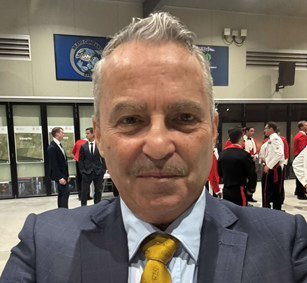 Dr Richard Davis is Senior Researcher in Anthropology at the Centre for Defence Leadership and Ethics, Australian Defence College. His work examines how people make moral sense of the worlds in which they have to live and act.
About Anthropology Working Papers
The Working Papers in Anthropology seminar series provides a forum for dissemination of anthropological research and ideas among UQ scholars and invited researchers. All students are invited to attend the series and postgraduate students, from honours upwards, are invited to present their research. The aim is to provide opportunities for students, staff and those from outside UQ, to present and discuss their work in an informal environment.