
Getting the Zoomies: Reflections on the application of ZooMS in Australian contexts - Speaker A/Prof Tiina Manne
Abstract
Over the last decade, new methods and techniques in zooarchaeology have created novel opportunities for gaining insights into past human-animal interactions, including the application of Zooarchaeology by Mass Spectrometry, or ZooMS. This method utilises the collagen of a fragment of archaeological bone to match it to a specific taxon, utilising known modern references. ZooMS has found particular favour overseas, for its power to differentiate difficult-to-identify taxa like Capra (goat) from Ovis (sheep). Over the past seven years, we have applied ZooMS as part of several UQ student-led projects, in collaboration with Professor Nicole Boivin at the Max Planck Institute for Geoanthropology, and Associate Professor Ali Crowther (UQ). In this working paper, I will discuss the specific challenges of undertaking zooarchaeology in Australia and how the application of ZooMS has added value to our understandings of the past.
About the Speaker
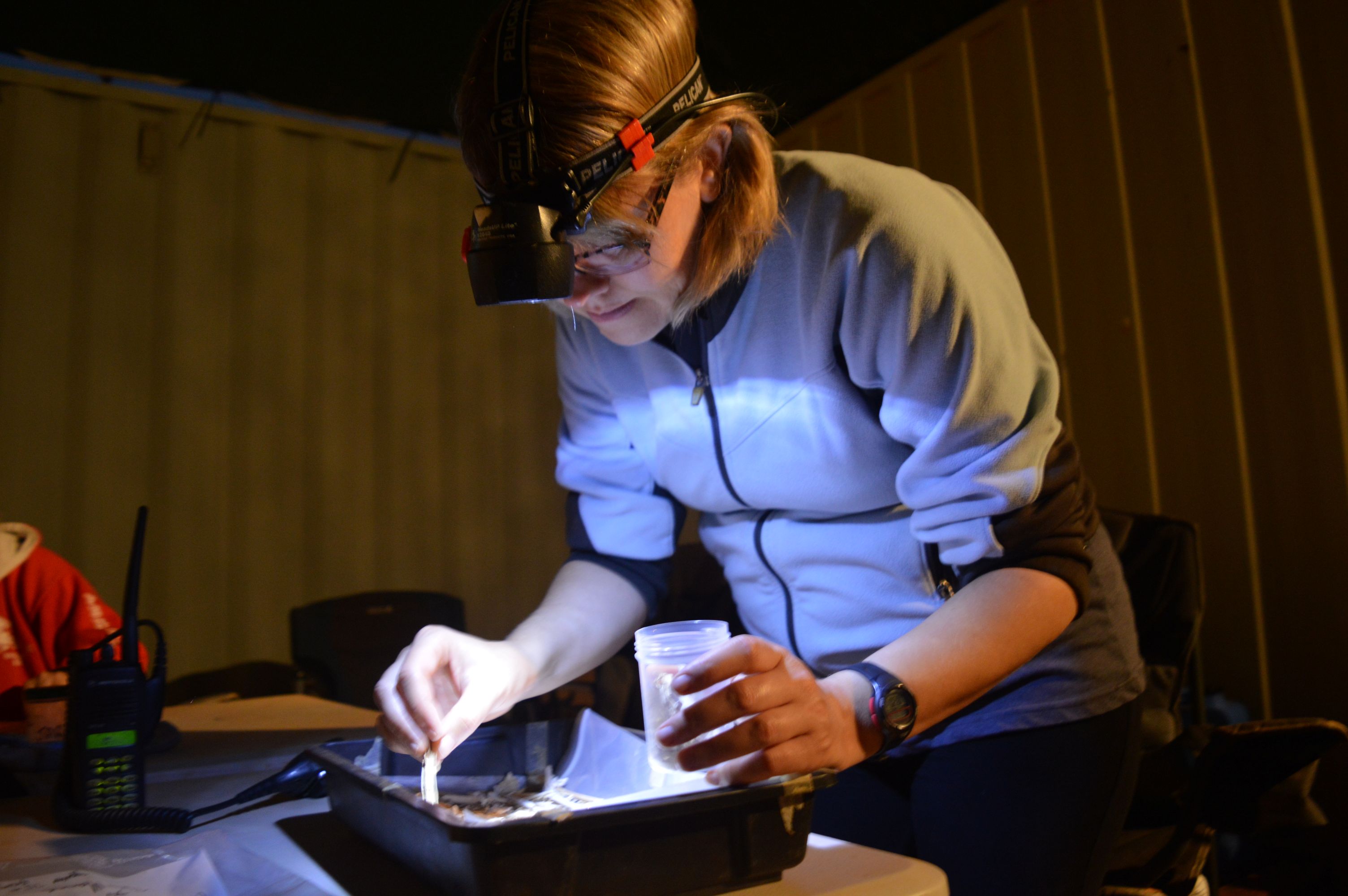 Tiina Manne is an Associate Professor of archaeology at the University of Queensland's School of Social Science. Her research focuses on reconstructing patterns in past diets to understand how people responded to large-scale climate, environmental and cultural change. Having undertaken zooarchaeological research in both Europe and Australia, Manne has spent the last decade wrestling with questions of taphonomy, sample size, method and theory, frequently with the help of dedicated honours and PhD students.
About Archaeology Working Papers
The Working Papers in Archaeology seminar series provides a forum for dissemination of archaeological research and ideas amongst UQ archaeology students and staff. All students are invited to attend the series and postgraduate students, from honours upwards, are invited to present their research. The aim is to provide opportunities for students, staff and those from outside UQ, to present and discuss their work in an informal environment. It is hoped that anyone interested in current archaeological directions, both within and outside the School and University, will be able to attend and contribute to the series.